Monday, July 25, 2011

Bishop Gene Robinson: In the Eye of the Storm (2008)


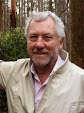
Bishop Gene Robinson is perhaps the third best-known Episcopal/Anglican bishop around the world (after the Archbishop of Canterbury, Rowan Williams, and Desmond Tutu): all because he’s been – reluctantly – the ‘Martin Luther’ of a new reformation in the church, advocating equality for glbt people.  

Wikipedia tells us that ‘the existence of homosexual bishops in the Roman CatholicAnglican, and other traditions is a matter of historical record, though never, until recently, considered licit by any of the main Christian denominations. Homosexual activity was engaged in secretly. When it was made public, official response ranged from inaction to expulsion from Holy Orders. As far back as the eleventh century, Ralph, Archbishop of Tours had his lover installed as Bishop of Orléans, yet neither Pope Urban II, nor his successor Paschal II took action to depose either man.
The article continues: 

It is in contemporary Anglicanism that the issue of homosexuality and its relationship to people in the episcopate has been confronted openly. Indeed, the only large mainstream church to ever consecrate an openly gay bishop who was not celibate has been the Episcopal Church in the United States of America, a member of the Anglican Communion, which consecrated Gene Robinson diocesan bishop of Diocese of New Hampshire in 2003. [1]

More from Wikipedia, on Vicki Gene Robinson (born May 29, 1947):  ‘[He] went public with his sexual identity and divorced in the 1980s. Robinson was elected bishop by the New Hampshire diocese on June 7, 2003, at St. Paul's Church in Concord. Wearing a bullet-proof vest he was consecrated on November 2, 2003 ([and] Retired South African Archbishop Desmond Tutu stated that he did not see what "all the fuss" was about’) [2]
  
In the Eye of the Storm Gene Robinson’s passionate (but graciously expressed) thesis is that ‘the planets seem to be aligned today’ for the full civil rights of glbt people - a struggle similar to those of the civil rights and feminist movements. He asserts that the way we think about sexual orientation today was unknown in biblical times. He supports sexual abstinence outside of committed relationships, and theologically would be regarded as a ‘moderate conservative’. His God is a God of radical inclusion, who wants to lift up all the oppressed, including women, minorities and the poor.

In the Eye of the Storm is a book of Robinson’s favorite homilies, spiced here and there with a few autobiographical details - like his childhood in a poor, uneducated, and deeply Christian family in rural Kentucky where his parents were tenant farmers; his first marriage by which he had two children; his treatment for alcohol dependence (there’s only one sentence about that); and his twenty-year commitment to partner Mark Andrews – about whom we learn almost nothing.

He comes across as a sensitive, warm and forgiving man – traits not always practised by many of his critics – who is utterly committed to the prophetic call to ‘do justice, love mercy, and walk humbly with our God’ (not – as the Prayer Book wrongly states – to ‘love justice [and] to do mercy…’) [3]   
Gay issues are essentially about social justice, and he views acceptance of lgbt people as inevitable.

Here are some bits I marked:

·      ‘Some estimate that between 40 and 60 percent of Roman Catholic priests are gay’ (18) [4]

·      ‘We’ve seen more promiscuity among gay men, not because both men are gay, but because both men are men. Studies of lesbian women show little or no interest in promiscuity’ (41)


·      ‘Literally hundreds of rights and protections afforded heterosexual couples at the utterance of “I do” are not available to us. The kinds of protections that became instantly available to Britney Spears – who, on a lark, decided one night in Las Vegas to get married – are not available to Mark and me despite twenty years of love and fidelity’ (48)

·      ‘[A Canadian bishop is] being lambasted around the world for blessing the union of two same-gender loving people. He and his people may be wondering why, if we can bless fox hunts and fishing fleets, we cannot bless two people who pledge to love one another in a faithful, monogamous, life-long-intentioned union and who seek the church’s blessing on that holy endeavor’ (98)

·      ‘To many, asking gay folk to return to church is like asking an abused wife to return to her abusive husband’ (99)

Gene Robinson knows that he will ‘never again be in a “small room.” Because of the high level of media attention, followed by the close scrutiny of those who oppose me, I'm never in a trusting, safe environment where I can let my guard down. Someone is always watching and will use anything I say against me’ (46).

I want to echo the heartfelt words from Desmond Tutu’s Foreword: ‘May I wholly inadequately apologize to my sisters and brothers who are gay, lesbian, bisexual or transgendered for the cruelty and injustice that you have suffered and continue to suffer at the hands of us, your fellow Anglicans; I am sorry. Forgive us for all the pain we have caused you and which we continue to inflict on you. Gene Robinson is a wonderful human being, and I am proud to belong to the same church as he.’

[1] Wikipedia article ‘Gay Bishops’
[2] Wikipedia ‘Vicki Gene Robinson’
[3] p. 125
[4] Elizabeth Stuart, Chosen: Gay Catholic Priests Tell Their Stories, 1993

Shalom!/Salaam!/Pax!

Rowland Croucher
July 2011

Friday, July 22, 2011

Harvey Cox, The Future of Faith (2009)

I have an unusual hobby: I collect generalizations. The scholars who supply them have a magisterial grasp of their subject, and can offer outrageously simple ‘global statements’ without fear of contradiction. This book is full of them.

Harvey Cox retired from the Hollis Chair of Divinity at Harvard University in October 2009 (he was the ninth person to hold this prestigious post which, established in 1727, is the oldest endowed professorship in American higher education.)

I remember as a theological student reading his The Secular City when it was first published in 1965: and I’m not surprised it’s sold one million copies.

An ordained Baptist minister, Cox’s main area of interest has been trends in global Christianity (its history, geography, theology and spirituality) with a special focus on Latin American liberation theology. In 1900 90% of Christians lived either in Europe or in the US but today 60 percent live in Asia, Africa, or Latin America. Dr Cox writes: ‘Since the vast majority of people in this “new Christendom” are neither white nor well-off, their theological questions center less on the existence or nonexistence of God or the metaphysical nature of Christ than on why poverty and hunger still stalk God’s world. It is little wonder that liberation theology, the most creative theological movement of the twentieth century, did not originate in Marburg or Yale, but in the tar-paper shacks of Brazil and the slums of South Korea.’

This readable book is a cross between autobiography and polemics. Cox takes us on a journey through three phases of the evolution of Christianity: the Age of Faith (kiboshed – my word – by Constantine), the Age of Belief and the Age of the Spirit. His sympathies are categorically with the first and last of these, and his vitriol is mostly reserved for institutional and theological fundamentalisms of all kinds. The early churches were vibrant, enthusiastic communities dedicated to ‘following’ Jesus. But in ‘The Age of Belief’ from the fourth to the twentieth centuries, faith became entangled with rituals, liturgies and creeds, orthodox theology mostly replaced personal religion, and a stifling clericalism developed.

So the gist of The Future of Faith can be summarized thus: the church world-wide is in good shape when it jettisons at least three concomitants of ‘Constantinianism’ – institutionalism, hierarchicalism, and creedalism. These three destructive tendencies are not compatible with the church as a missional community; they destroy faith (as distinct from ‘beliefs’). Cox reckons the Pentecostals in Latin America (those influenced by the Hebrew prophets, Jesus, and liberation theology rather than Western notions of ‘prosperity theology’) point the way to a dynamic ‘Age of the Spirit’. One of the key secrets of these ecclesial communities’ social justice ministries? They make lists – lists of people in their neighbourhood who need help. And – importantly - they and the Catholic ‘base ecclesial communities’ are not imprisoned within a fundamentalism of ‘Jesus as personal savior whose mission [is] to rescue them from a sinful world…’

‘Faith is resurgent, while dogma is dying. The spiritual, communal and justice-seeking dimensions of Christianity are now its leading edge as the twenty-first century hurtles forward, and this change is taking place along with similar reformations in other world religions’ (p.212). So the healthiest Christianity emphasizes faith as a way of life (rather than the fundamentalists’ doctrinal boxes we must tick), respectful inter-faith dialogue, and ‘deeds not creeds’ (his quote from conservative pastor Rick Warren).

‘Christianity came to birth in the midst of cultural change — it is a movement born to travel – it takes on life with each succeeding cultural transition. But for this to happen again, some old wine-skins must be discarded, and the incubus of a self serving and discredited picture of Christian origins must be set aside’ (p.184). ‘We stand on the beautiful threshold of a new chapter in the Christian story – Christians on five continents are shaking off the residues of the second phase (the Age of Belief) and negotiating a bumpy transition into a fresh era for which a name has not yet been coined. I would like to call it the Age of the Spirit’ (p.8).

For Cox, faith starts with awe, not propositions. ‘It begins with a mixture of wonder and fear all human beings feel toward the mystery that envelops us. But awe becomes faith only as it ascribes some meaning to that mystery.’ (Interesting that. As I pondered where my Christian faith began, I have to say it wasn’t awe – though that came later – but a commitment to the person and teaching of Jesus…).

Harvey Cox would probably not categorize himself a ‘theological progressive’, but critiques that movement as he does all others. (You’ll be hard-pressed to find here any reference to Spong or Crossan: Borg, I think, is mentioned just once – or N T Wright or John Stott for that matter. And interestingly he doesn’t cite any websites in his references/ endnotes).

Here’s the best quote in the book:

‘I have often seen what damage both fundamentalist literalism and historical-critical skepticism can do to otherwise thoughtful and serious people. Take the critical specialists with a grain of salt: they are not experts in what the Bible means for today. And the fundamentalists? Their literalistic reading is a modern and questionable one.’ (p. 168)

This readable book is a real page-turner! You can get the paperback edition post-free from the Book Depository for AUD $14-78: excellent value.

~~

Rowland Croucher

http://jmm.aaa.net.au

July 2011


Monday, July 11, 2011

Weeping Woman by Pablo Picasso (1937)


This is a study of how much pain can be communicated by a human face. It has the features of a specific person, Dora Maar, whom Picasso described as "always weeping". She was in fact his close collaborator in the time of his life when he was most involved with politics.
Let your eyes wander over the sharp surface and you are led by the jagged black lines to the picture's centre, her mouth and chin, where the flesh seems to have been peeled away by corrosive tears to reveal hard white bone. The handkerchief she stuffs in her mouth is like a shard of glass. Her eyes are black apertures. When you are inside this picture you are inside pain; it hits you like a punch in the stomach.
Picasso's insistence that we imagine ourselves into the excoriated face of this woman, into her dark eyes, was part of his response to seeing newspaper photographs of the Luftwaffe's bombing of Guernica on behalf of Franco in the Spanish civil war on April 26, 1937. This painting came at the end of the series of paintings, prints and drawings that Picasso made in protest. It has very personal, Spanish sources. In May 1937 Picasso's mother wrote to him from Barcelona that smoke from the burning city during the fighting made her eyes water. The Mater Dolorosa, the weeping Virgin, is a traditional image in Spanish art, often represented in lurid baroque sculptures with glass tears, like the very solid one that flows towards this woman's right ear. Picasso's father, an artist, made one for the family home.
This painting takes such associations and chews them to pulp. It is about the violence that we feel when we look at it, about translating the rawest human emotion into paint. Its origins lie in the tortured figures of Picasso's Guernica (1937), whose suffering is calculated to convey you beyond the photographs of the bombing to sense momentarily what it was to be there. In Guernica there is a screaming woman holding her dead baby, her tongue a dagger pointing at heaven. The baby's face is a cartoon of death. Picasso followed Guernica with his series of Weeping Woman paintings in which the woman's mourning continues, without end. She cries and cries. In different versions the Weeping Woman's face is crushed to an abject lump, twisted out of recognition. 

Extract from an article by Jonathan Jones, May 13, 2000, The Guardian
                    http://www.inminds.com/weeping-woman-picasso-1937.html

Monday, June 20, 2011

Love is an Orientation (Andrew Marin, IVP, 2009)


Here's a unique book by a unusual young man - a 'straight, white, conservative, evangelical male' with a belief in 'the Bible as the inerrant word of God' -  who addressed a large conference of not-necessarily-Christian Gays/Lesbians and received a standing ovation!

I've never heard of anyone with his general theological stance who's done that and had a reception like that. The common mantra for his kind of Christian is 'love the sinner hate the sin' - something he doesn't use (mostly because those people don't generate love as Jesus did, so Andrew suspects there's something wrong with that approach).

What's his secret? Simple, really: do what Jesus did, immerse oneself in the culture of the marginalized, and honour them as human beings also made in the image of God. Don't preach at them. Don't offer the Pharisee-talk ('Change... and you'll be acceptable around here': for Jesus it was the other way around - acceptance *preceded* repentance). Listen to their stories (and as he found, the question about whether a gay lifestyle is a freely-chosen one answers itself in the vast majority of cases). Share their pain (especially when they've prayed to be changed from a same-sex attraction, and wakened 'every morning not having that prayer answered... wondering whether there really is a God, or [being convinced] that [one] is condemned to hell because of attractions [one] can't figure out'). 


Also - and this is important - don't get bogged down arguing about the 'clobber texts' from Leviticus, Romans and 1 Corinthians. Again do what Jesus did: in the Gospels he was asked 'closed-ended' questions 25 times but only directly answered three or four of them (pp. 179 ff.). So leave the hermeneutical questions to biblical scholars, and the aetiology of gender-orientation to the scientists, and start loving/accepting the marginalized.

'They'll know we are Christians, not by our proof-texting, but by our love' writes his mate Shane Claiborne in a commendation on the first page. 

Now, Andrew's theological approach isn't quite mine. Except for Thomas Merton (quoted, I think, twice) all of his 'respected theologians and Bible scholars' are fundamentalists or conservative evangelicals (my terms - people  like John MacArthur, et. al).

Interestingly, Andrew has chosen the fundamentalists' arch-enemy Brian McLaren to write the Foreword - which Brian does with what is now his famous parable (expanded in his recent book A New Kind of Christianity) about 'sincere well-intentioned religious people who believe in their religion so fervently they would die for it but also would kill for it - literally or metaphorically...' Brian McLaren urges us to hang in there until the last page, and not 'check-list' Andrew's approach or opinions against our own preconceived ideas... That's excellent wisdom for a book and a topic like this...

Here are some summary-statements; and others which 'gave me pause':

* 'Unless you have been sexually attracted to someone of the same sex you can never fully grasp, as a heterosexual Christian, what that means'... 'From my experience, the GLBT community's default system is to never take anything Christians say as genuine' (33)  

* 'The Christian community has only ever known one way to handle same-sex sexual behavior: take a stand and keep a distance' (37)

* 'In general, Christians' default belief system is that [same-sex attraction] is environmental... I know many Christians who enjoy playing psychologist - talking to GLBT people to figure out if they had an absentee dad or a domineering mom... or experienced some kind of sexual abuse in their youth... Research suggests that on average only 7 to 15 percent of the GLBT community was sexually abused in their youth' (39, 42) 

* 'Among gays and lesbians " love the sinner, hate the sin" is the most disdained phrase in the Christian vocabulary' (46)... [As Christians we have] 'an opportunity to change the culture by... offering hope and compassion to a people who have been burdened with a thick dose of stigma and shame in all aspects of their life' (53)

* 'Even as recently as 2002 there were still fourteen states [in the U.S.] that upheld the sodomy law, and in Idaho, one could land a lifetime sentence in jail for engaging in gay sexual behaviors' (55)

* 'The word homosexual is offensive to someone who is gay, lesbian, bisexual or transgender. So instead use words like gaylesbianGLBTgay and lesbian community' (60) 

* 'Gay Christians believe that the passages in the Bible that condemn same-sex relationships are not referencing long-term, committed monogamous relationships. Rather, [they're] talking about inhospitality, heterosexual rape, pagan ritual sex and orgies, and pederasty (men having sex with boys)' (73)

* 'Currently in many circles both gay and straight, scientific and religious, there has been a more common acceptance of homosexuality's etiology as a combination of biological, environmental and social factors that all contribute to gay orientation' (75-6)

* 'Gay Christians have started to change the mainstream's mindset that GLBT people crave random sex, are STD-laced, and have alcohol and drug problems' (76)

* 'There is no wrong way to humbly listen and learn! ... I... trust in the faithfulness of my loving Father to fill in the gaps that I can never understand'... I promise that God loves his children enough that he will always tell them what... is best for their life' (78-9, 86)

* '80% of the GLBT community want nothing to do with [ex-gay ministries]' (99); according to the ground-breaking book unChristian, [among] 16-29-year-olds the three most common perceptions of present-day Christians are that they are anti-gay (91%), judgmental (87%) and hypocritical (85%)' (100)

* 'A great open-ended question is, "What's it like to be you?"' (163). 'I don't care if gays and lesbians are or aren't born that way... Here is a good question: "How do you think your genetic make-up relates to God's desire to be called your Father?"' (182)

* 'I know some people who say that they once had same-sex sexual attraction but are now attracted exclusively to people of the opposite sex, and in fact are married and have kids and are living a happy life. Just the same I know people who have tried and tried and tried, and have not been able to "change their sexual orientation," and therefore have stopped trying and are actively involved in the GLBT community: all these people from both life experiences are telling the truth as they perceive it, and each falls somewhere different on the spectrum of change' (184)

* Marin's conclusion: 'We're not called to posit theories that support our assumptions. We're not called to speculate about genetics or development experiences or spiritual oppression in faceless groups of other people. We're called to build bridges informed by the Scriptures and empowered by the Spirit. We're called to let God be the judge of his creation. We're called to let the Holy Spirit whisper truth into each person's heart. And we're called to show 
love unconditionally, tangibly, measurably' (187)

If Andrew Marin read more mainline theologians, he would appreciate quotes like this one, from Walter Brueggemann's The Prophetic Imagination:

'Jesus in his solidarity with the marginal ones is moved to compassion. Compassion constitutes a radical form of criticism, for it announces that the hurt is to be taken seriously, that the hurt is not to be accepted as normal and natural, but is an abnormal and unacceptable condition for humanness...

'Empires are never built or maintained on the basis of compassion. The norms of law (social control) are never accommodated to persons, but persons are accommodated to the norms. Otherwise the norms will collapse and with them the whole power arrangement. Thus the compassion of Jesus is to be understood not simply as a personal emotional reaction but as a public criticism in which he dares to act upon his concern against the entire numbness of his social context.'

Shalom!/Salaam!/Pax!

Rowland Croucher  http://jmm.aaa.net.au


June 10, 2011


Friday, November 05, 2010

Jonathan Franzen, Freedom: A Novel

Nearly a decade after publishing his prize-winning novel The Corrections, Franzen has done it again. Freedom is currently (November 2010) the most-discussed contemporary work of English-language fiction in the U.S. and Australia and who knows where else.


Freedom is the complicated story of an unfree, deteriorating middle-class Minnesotan family (parents Walter and Patty Berglund, children, lovers, assorted relatives, neighbours, friends, shysters and enemies) who battle all their lives with unresolved family-of-origin issues. Walter's main agenda - as also with his Swedish male ancestors - is to avoid facing the threatening realities of deeply-buried emotions. Patty's emotional life is dominated by the pain of her parents' preoccupation with high-flying professional and political  agendas, a date-rape incident, and of course relating to her one-dimensional husband.


Nearly a decade after publishing his prize-winning novel The Corrections, Franzen has done it again. Freedom is currently (November 2010) the most-discussed contemporary work of English-language fiction in the U.S. and Australia and who knows where else.


Freedom is the complicated story of an unfree, deteriorating middle-class Minnesotan family (parents Walter and Patty Berglund, children, lovers, assorted relatives, neighbours, friends, shysters and enemies) who battle all their lives with unresolved family-of-origin issues. Walter's main agenda - as also with his Swedish male ancestors - is to avoid facing the threatening realities of deeply-buried emotions. Patty's emotional life is dominated by the pain of her parents' preoccupation with high-flying professional and political  agendas, a date-rape incident, and of course relating to her one-dimensional husband.


Walter and Patty are university graduates. He's a naive, nice, corporate lawyer/do-gooder, who resigns from 3M and moves into nature conservation, working for a minerals magnate who wants to turn some of his ill-earned millions into saving a small woodland bird, the Cerulean warbler. You might judge (if you're naive) that this is triple-bottom-line stuff, but there's only one outcome that magnate is interested in...


Franzen's main offering is a many-layered analysis of the Berglunds’ marriage. He tells the story partly via the device of Patty's journaling for her therapist - which, oddly, is composed in the third person.


The Berglunds are, at the beginning, NQR (not quite right) caricatures, nonentities who are nevertheless redeemed at the end. (I won't spoil it by disclosing the story-line). The main message: nonentities are people too. If they're willing to be humble and vulnerable and name their demons, they (and their families/marriage) can be saved.


So there's really a collision of 'freedoms' here. Every prodigal is free to flee to the far country (New York etc.) to escape family-of-origin realities, but there, in the loneliness of various pig-pens, each comes to realize that there's no place like home, if only they could figure out how to reconstruct home from the debris of past hurts.


Sample: 'He'd needed an extra brother to love and hate and compete with. And the eternal tormenting question for Walter... was whether Richard was the little brother or the big brother, the f***up or the hero, the beloved damaged friend or the dangerous rival' (131). (Note: they're my ***'s. You'd better cope with the four-letter words here or you'll get distracted...).


(Client: tell me how all this generally resonates with your story).


Sex is a major theme. Mostly problematical sex. Like here: 'Walter was what he was, and he wanted what he was to be what Patty wanted. He wanted things to be mutual! ... Eventually after years of resisting, she managed to get him to stop trying altogether. And felt terribly guilty but also *angry* and *annoyed* to be made to feel like such a failure... Sex seemed to be a diversion for young people with nothing better to do' (140-1).


There's also spectacular sex, sex within intersecting love-triangles, feral sex, half-hearted sex, depersonalized sex, phone sex, date-rape, promiscuous American College sex, and lots of other kinds of sex you didn't think you needed to know about. (Speaking of which: do you know any other author who's described in somewhat graphic detail how someone retrieved a wedding ring they'd swallowed?).


On the sub-themes of endangered bird-species, and overpopulation, I noted these:


* 'Too many damn people on the planet. It's especially clear when we went to South America. Yes, per capita consumption is rising. Yes, the Chinese are illegally vacuuming up resources down there. But the real problem is population pressure. Six kids per family versus one point five. People are desperate to feed the children that the pope in his infinite wisdom makes them have, and so they trash the environment' (219).


* 'The low-end estimate of songbirds daily murdered by cats in the United States [is] one million, ie. 365,000,000 per year (and this... [is] a conservative estimate and did not include the starvation of the murdered birds' chicks' (545). Back on page 222: 'Every year in the U.S. one *billion* songbirds are murdered by domestic and feral cats... but no one gives a s*** because they love their own individual kitty cat'.


* 'Walter had never liked cats. They seemed to him to be the sociopaths of the pet world, a species domesticated as an evil necessary for the control of rodents and subsequently fetishized the way unhappy countries fetishize their militaries, saluting the uniforms of killers as cat-owners stroke their lovely fur and forgive their claws and fangs. He'd never seen anything in a cat's face but simpering incuriosity and self-interest; you only had to tease one with a mouse-toy to see where its true heart lay' (548).


The central metaphor - until you get to the denouement at the end - is not freedom but duplicity. It's Franzen's long sermon on the topic 'How Should We Then Live?' Someone on Amazon.com wrote: 'The apocalpyse, when it comes, clears the way for a postlude, set in Minnesota, that is as haunting as anything in recent American fiction. Visiting her daughter’s university, Patty observes a stone engraved with the words, “USE WELL THY FREEDOM”. The warning is there throughout. With its all-encompassing world, its flawed heroes and its redemptive ending, “Freedom” has the sweep of a modern “Paradise Lost”.'


Well, you get the idea. Professional reviewers and book clubbers (the 'chattering classes') will like it (there are glowing reviews in the NYT, Time, the Economist, etc.) but the comments by ordinary folks at Amazon.com - innocents who are prepared to say the emperor has no clothes -  often only give it one or two stars out of five. Franzen has too many contrived conversations and improbable happenings (like a 19-year-old arms dealer traveling to Poland and Paraguay to make procurement purchases of spare parts for broken-down military trucks in Iraq).


I had three '!!!' moments: Walter's 'Welcome to the middle-class' speech (to which I responded, aloud, 'yoo-hoo!); a beautifully lyrical paragraph (485) on the wonders of bird migration; and a moving set of reconciliations towards the end (when I cried).


A little warning or two: for me this novel started slowly, but 'took off' about half-way through. Franzen could have reduced the number of characters by a third (to help folks with a 73-year-old brain to remember who's who). And he's verbose - maybe he'd have said more in 30 percent fewer pages. He writes brilliantly, of course (but not as fluently as John Updike), offering a lot of detail about this and that which had me skimming paragraphs.


If you enjoyed this you should also read Garrison Keillor (funnier), Tolstoy (who's in a league of his own) and John Updike (a better wordsmith).


Rowland Croucher


November 2010


Thursday, July 15, 2010

Understanding the Bible: Three Helpful Volumes


These three books have different target-audiences. Philip Fogarty SJ 'Navigating the Gospels: John' aims to help the Catholic faithful get to grips with the essence of the purpose and teachings of the Fourth Gospel. Dean Drayton's 'Which Gospel? Three New Testament Perspectives' is an excellent summary of the NT's understanding(s) of what 'Good News' really means. And 'The Children's Bible: New Revised Standard Version' is aimed at young people.


1. Philip Fogarty SJ, 'Navigating the Gospels: John' is written by an Irish Jesuit, a former headmaster, whose aim is to reinforce the essential belief-system of Catholics against the unhelpful emphases of liberal theologians on the one hand and Protestant fundamentalists on the other. To the liberals he affirms Jesus was God; to the fundamentalists Jesus was truly human. 


Although he's done his homework in terms of the way the fourth gospel was put together (we learn a little about the sitz im leben of the Johannine community in 80-110 AD, especially their need to be encouraged in the basics of the Christian faith after being driven from the Jewish synagogues); and how this gospel was written and later redacted etc. there are hardly any references to the findings of biblical scholars. This book is a simple paraphrase of the stories and 'signs' in John, with a final chapter quoting the Second Vatican Council's statement on what it means for the Bible to be the inspired Word of God. A good, readable introduction especially helpful for Catholics who are beginning their quest to seriously understand this important New Testament gospel.


2. Dean Drayton is a well-known scholar-missiologist in Australian Uniting Church circles. This book - Which Gospel? Three New Testament Perspectives' - gives a helpful overview of various understandings of the notion of 'The Gospel' throughout Christian history, and suggests that all of them were lacking something important when put side-by-side with key New Testament emphases. Essentially, the Gospel is 'the Gospel of God' - it's God's initiative - not just a temporal/eternal palliative for individuals' needs for forgiveness, happiness etc. Again, although Dr. Drayton has read the scholars and is familiar with the findings of modern literary-historical criticism, very little of this is cited in this volume, which is aimed to help study-groups of thoughtful laypeople (with excellent prompts for personal and group reflection at the end of each chapter).


Here are some gems I marked to provoke thought:


* Bidden or unbidden, God is present


* Hebrews and Luke shun the term 'the gospel'


* The early church focussed its message on the resurrection of the crucified Jesus rather than his message of the Kingdom of God


* Isaac Watts' hymn 'When I survey' (c. 1707) is one of the first to use the personal pronoun


* Wesley was the last English-speaking mass-evangelist to have had a University education. (Others, notably Dwight D. (sic) Moody and Billy Graham weren't in that league)


* Liberal and Fundamentalist alike are rationalists


* The biblical God is not a 'democratic' God of choice, but a God of power


* The key understandings of the Gospel should arise from our 'aboriginal' (Drayton uses that generic adjective four or five times in this little book) documents, the texts of the New Testament.


Again, readable, thoughtful, useful for church adult study groups...


3. Children's Bible (New Revised Standard Version, Abingdon). 


Here's a colourful edition of the most popular version of the Bible in use in mainline Christian churches, targeted especially for young people. The colourful illustrations would appeal mostly to four-to-eight year olds; the helps (glossary, maps, summary-paragraphs throughout etc.) to eight-to-14+ year olds, and the paragraph titles (Colloquy ! etc.) to 14-plus year olds. You choose the age at which you give this to your child/ren. As Evangelical churches and Sunday Schools still mostly use the NIV translation, this one might have to sit on the shelf at home for further study. 

Rowland Croucher


http://jmm.aaa.net.au/


July 2010


Monday, April 26, 2010

CHRISTIANS HAVE A BIBLICAL MANDATE: BE POLITICAL


by Rowan Forster and Rowland Croucher
The comments by Australian Foreign Minister Alexander Downer about clergy ‘rushing for cheap headlines’ by getting involved in political statements, and the subsequent debate got us thinking…
Barney Zwartz, in his article on meddlesome priests (The Age, Opinion, 2/9), notes that the Judeo-Christian faith is not only about personal piety, but also social justice. Interfering clerics and prophets have, for 3000 years, been the bane of those who benefit from an unjust political system.
Take for instance that troublesome Baptist minister, Martin Luther King. He really should have kept his nose out of political issues, and kept his dream to himself. The duly elected Governors of Alabama and Mississippi were doing just fine until he came along. Why is religion getting mixed up with human rights?
Then there were those interfering archbishops, like Desmond Tutu in South Africa and Janani Luwum in Idi Amin’s Uganda. They should have left their political leaders alone, to govern as they saw fit. Same goes for Cardinal Jaime Sin in the Philippines under the enlightened rule of Ferdinand Marcos, and church leaders who opposed Pol Pot in Cambodia.
And what about Archbishop Oscar Romero in El Salvador? If only he’d kept his mouth shut, he might still be alive. As for the likes of Dietrich Bonhoeffer and Martin Niemoller in Nazi Germany, they should have stayed inside church cloisters instead of blundering into political activism.
Closer to home, meddlesome clerics like Tim Costello and Ray Cleary shouldn’t be shooting off their mouths about gambling and other social issues. Don’t they realise gambling addicts have a democratic right to sacrifice their homes and families and commit suicide if they want to, without interference from religious do-gooders?
And it’s not just clerics, either. Look at all those religiously minded laymen and women who have meddled in matters that don’t concern them. Like William Wilberforce dragging his Christian faith into the slavery issue, or the Earl of Shaftesbury interfering in the politics of child labor and other forms of exploitation. Or William and Catherine Booth meddling in issues of social and economic inequality, and founding the Salvation Army.
Then there’s Elizabeth Fry interfering in the field of prison reform; Florence Nightingale who founded the modern nursing movement; Cicely Saunders who founded the modern hospice movement; Henri Dunant who founded the Red Cross; and other meddlesome religious zealots who founded Alcoholics Anonymous, Amnesty International, Habitat for Humanity, Opportunity International, World Vision, TEAR Fund, and a host of other enterprises that can be traced back to a religious motivation.
Is a world without religious interference what we really need? The resultant welfare bill would send all governments flat broke. Expediency would be more likely to triumph over conscience, and brute force over moral persuasion. There’d be less of a check on the excesses of genocidal tyrants, murderous despots and ruthless pragmatists.
New Testament Christians, as Karl Barth pointed out, faced the dilemma of relating to Nero’s Rome, which in Romans 13 is a divinely-ordained institution to be obeyed, but in Revelation 13 is ‘the beast from the abyss’. When governments invoke order at the expense of freedom, tyranny usually results. But, yes, freedom without order is anarchy. The Christian social philosopher Reinhold Niebuhr used to say ‘There is no peace without power, and no justice with power.’ So a Christian has two responsibilities: to support legitimate law and order, but also to promote social justice.
Christians with a social conscience – whether clergy or not – have a biblical mandate to get involved in political debate. Pericles put it well: ‘We do not say that a man who takes no interest in politics minds his own business. We say he has no business here at all.’

Thursday, April 15, 2010

MARK DURIE: THE THIRD CHOICE

Mark Durie, The Third Choice: Islam, Dhimmitude and Freedom (2010)

Critiquing Islam, some can be so "truthful" they come across as bigoted (one Christian politician wants "no more Muslim immigrants"); others are so "politically correct" they can be guilty of appeasement. Mark Durie, in this well-researched book, works hard to "speak the truth in love". An expert on the language and culture of the Acehnese, Dr Durie has published several books and many articles on Christian-Muslim relations.

Throughout Islamic history, conquered peoples could convert to Islam, die by the sword, or accept "dhimmi" (inferior) status and pay tribute under sharia law. A benign explanation of dhimmitude (like Wikipedia's) emphasizes "protection", "guarantee of minority peoples' rights" etc. Mark isn't so sure. Rather, these subjects – Christians, Jews and others - are often denied basic rights and personhood. Consider, for example, the two million lives lost - many of them Christians - in the Sudanese jihad; in Egypt or Turkey it's difficult (and in Saudi Arabia impossible) for Christians to get permission to build churches. Many other examples are cited.

Durie 'tells it like it is'. Example 1: Why do Muslims - one in twenty of Denmark's population - comprise the majority of the country's convicted rapists? 2. "Even in non-Muslim societies some Muslims can be aggressive and confrontational in pressing for their rights, and yet take offense when non-Muslims insist on theirs". 3. "The Muslim world has not to this day apologized to non-Muslims for jihad and dhimmitude. Muslims have not confronted their bitter past". 4. "The precedents for violence in Muhammad's life have absolutely no parallels in the life of Christ".

But what about the Old Testament? And the sometimes bloody history of Christianity - forced conversions, Crusades etc? I'd also have wished for more insights from Muslims living in Western countries (like the mysterious U.S.-based Turkish educator Fethullah Gulen, who asserts that "Terrorists are as bad as atheists, and both will go to hell”).

A fascinating chapter links historic Islamic psychology to episodes of rejection in Muhammad's life.

It's a great read: and I learned a lot from chasing many of the excellent footnotes on the Web.

Rowland Croucher

John Mark Ministries

More: http://jmm.aaa.net.au/catalog/keyword/i-12.htm

****

Mark's response:

I have written elsewhere a comparison of violence in the Bible and the Quran, including the Old Testament, but Christian violence was not the subject of this book. The book is also not intended to be a comparison of Christianity and Islam. It would have grossly distorted its presentation to have gone in that direction. One of the problems of the current culture of political correctness and self-inculpation is that one is not allowed to analyse Islam without criticizing Christianity at the same time. Self-inculpation becomes a knee-jerk response. This is debilitating and illogical. Let us give Islam the respect it deserves, and treat it on its own terms. Christian crimes throw no insight on the problem of understanding the dhimma - they are quite irrelevant.

Yes, I could have dealt with the mythology of the crusades as an act of aggression against peaceful Muslims, and referred readers to e.g. Robert Spencer on this. However I already had material like this, e.g. in reference to the Andalusian 'golden age' mythology, and did not really wish to rehash the already widely-available material on the history of Islamic jihad.

In fairness, I did acknowledge the origins of some fo the dhimma laws in the Christian Byzantine legal treatment of the Jews. (I used that comparison with Jesus to help people understand Muhammad, not to try to make an comprehensive comparison of Christianity with Islam).

Fethullah Gulen is by no means a moderate, but a master of taqiyya. He is widely understood to be driving the Islamization of Turkey. I will send you a few articles. There are liberals in the Muslim world, and you are correct, I did not engage with their proposals. This is because of irrelevance. They tend to overlook or downplay the issue of dhimmitude and have little relevant to say about it. In some cases they just lie, for example Tantawi (recently deceased) has a commentary on 9:29 in which he claims past Muslim scholars have shown that dhimmis enjoy equal rights with Muslims. The scholars he cites actually say exactly the opposite. I could have used Tantawi - a 'moderate' of sorts, despite his anti-semitism - as an example of deception and denial, but I already had plenty of that.

In all fairness, I did cite some Muslims who are concerned about the treatment of non-Muslims and have been willing to speak up about it. I have written elsewhere on the issue of "reforming" Islam and the difficulty of achieving this. However the lived reality of non-Muslims under sharia law today shows a trend towards sharia implementation, not liberalization. There is no global liberal Islamic movement comparable, say, to Reform Judaism, only isolated individuals, whose voice is marginal and very existence is threatened.

Mark Durie


Thursday, September 24, 2009

SPIRITUAL INTELLIGENCE


Spiritual Intelligence: A New Way of Being, Brian Draper, Lion, 2009.

We know about rational intelligence (remember those IQ tests at school?). And emotional intelligence (you’ve read Daniel Goleman’s best-seller Emotional Intelligence: Why It Can Matter More Than IQ). So if our cognitive and affective behaviors can be measured in terms of performance, someone had to come up with an equivalent for the dimension of the spirit. And this happened quite recently, apparently, when in the year 2000 Oxford academic, philosopher and spiritual writer Danah Zohar coined the phrase ‘spiritual intelligence’. ‘She suggested that it forms the central part of our intelligence, the part in which our values and beliefs are nurtured and in which we can work towards our full potential as created beings’ (p. 12).

Brian Draper, British freelance writer, seminar-leader, contributor to BBC Radio 4’s thought for the day etc. says spiritual intelligence is figuring out who we were created to be in the first place – the ‘unique you’. (Parker Palmer teaches similarly in the United States). It’s about listening to the child’s voice within us, and to the riches buried in our traditions – ‘riches that help us to make those soulful reconnections that many of us, deep down, yearn to make – with the world around us, with each other, with our selves, and with the higher power often called God’. It’s really all about common (or uncommon?) sense. Or a ‘spiritual’ person’s equivalent of ‘smelling the roses’.

The standard contemplative wisdom is here: listening to our breathing, eliminating invasive noise (eg. by trying a week without TV), and being still. One of Draper’s favorite questions is the Gen X writer Douglas Coupland’s: What do we do when the power fails? It’s not about conquests but connecting with our reality. As Marcel Proust wrote, ‘The real voyage of discovery consists not in seeking new lands but in seeing with new eyes’. It’s about ‘seeing the world from up here’ as Robin Williams’ character Mr. Keating tells the boys when he climbs on to his desk in Dead Poets Society.

Spirituality is about the tension between contemplation (being) and action (doing). It’s about what you’re not (a consumer of this world) versus what you are (in communication with the world). Take some time to write your obituary. Our ego attaches itself to things around us, or the desired perceptions of others. So in this uncertain world, as Eckhart Tolle reminds us (Draper probably quotes Tolle more than any other wise person) ‘you can assume that virtually everyone you meet or know lives in a state of fear. .. Most become conscious of it only when it takes on one of its most acute forms’.

You get the idea… This is the book to read before Tolle’s The Power of Now. It connects us with ancient wisdom (though I reckon Draper could have used more biblical material: conservatives might accuse him – and they’d be wrong - of being ‘New Age-ish’). And he could have tapped more into the traditional wisdom of the church, which has been wrestling with all this for 2000 years under the rubric of ‘Spiritual Theology’ (he quotes Augustine, but I don’t think Meister Eckhart gets a mention, though, surprisingly for a Brit, American Franciscan Richard Rohr does, fairly frequently).

Near the end is a quote from D H Lawrence: ‘I am not a mechanism, an assembly of various sections./ And it is not because the mechanism is working wrongly that I am ill, / I am ill because of wounds to the soul’. Yes!

Get it for your family-member or friend who’s not yet had their mid-life crisis and is still moving too fast across the face of the earth trying to prove their worth by out-performing others. (You know the best description of a mid-life crisis? It’s realizing you’ve reached the top of the ladder, but it’s leaning against the wrong wall). And read it slowly – digest a couple of pages a day for a couple of months. Write ‘ouch!’ occasionally in the margins (as I did), and it could even be life-changing.

Rowland Croucher

August 2009

Shalom/Salaam/Pax! Rowland Croucher

http://jmm.aaa.net.au/

Justice for Dawn Rowan - http://dawnrowansaga.blogspot.com/


Tuesday, September 01, 2009

EXPLORING ECCLESIOLOGY

Review: 'Exploring Ecclesiology: An Evangelical and Ecumenical
Introduction' (Brad Harper and Paul Louis Metzger, 2009).

Here's a good textbook for a basic course in 'Ecclesiology 101' (or what
used to be called 'Church, Ministry and Sacraments' back in my seminary
days). Though written 'densely' in text-book fashion (a few good
stories, lots of Bible texts, with some useful quotes and endnotes) it
would also comprise an excellent study-guide for church leaders.

The Recommended Reading List features authors like Donald Bloesch, Tony
Campolo, Mark Noll, D. Elton Trueblood, and Robert Webber: for those in
the know, they're more (progressive) evangelical than 'mainline' (eg.
the Alban Institute isn't, I think, mentioned) or ecumenical (eg.
published statements from 20th century Conciliar conferences don't
feature either). But there's a good balance between history ('the church
did not begin with us') and postmodern concepts (eg. the way many/most
churches are imprisoned within their secular cultures).

It strongly critiques conservative evangelical churches' addictions to
individualism (individual persons, families, churches - and note the
words of their 'praise choruses') and consumerism (there's more movement
of 'consumers' between churches and even across denominations than ever
before). And since the 'Scopes Monkey Trial' in the U.S. conservative
Christians have had a tendency to operate outside of the public square -
except for the two 'Focus on the Family' issues of abortion and gay
marriage - and marry their eschatology with 'left behind' Dispensationalism.

A summary of the authors' theological approach: the church is a
trinitarian community, constituted through its communion with the Triune
God: and the likeness between God and humanity is fundamentally
relational; eschatologically understood: the church is 'the instrument
of the coming kingdom' which involves the redemption not only of the
church but of the whole creation; missionally driven: not simply having
'missions' as one emphasis-among-many; varied in terms of ecclesial/
authority models; and ideally 'community' in Henri Nouwen's sense:
'community is the place where the person you least want to live with
always lives'.

As I said, it's more 'Evangelical' than 'Ecumenical'. Only
Fundamentalist/Evangelical 'scholars' use the Bible as a 'flat text'.
For example, it's mostly poor scholarship to quote ecclesial concepts
from Paul's early letters and 'the pastoral epistles' in the same
sentence without noting the progression in thinking between these
contexts. And only conservatives keenly anticipate 'the marriage supper
of the Lamb' (mentioned probably a dozen times).

But on the other hand there's a fairly strong social concern/justice
message throughout the book. Item: Archbishop Oscar Romero got into
trouble with the rich and powerful because he refused to baptize their
babies in segregated services - away from the poor - or separate rich
and poor at communion. A nearby comment: A church in the U.S. decided to
focus on outreach to the wealthy, 'cos you get more 'bang for your buck'
that way.

And there's both praise and criticism of the Emerging Church movement:
hanging out at Starbucks is not the same as kneeling together at the
communion rail; a latte is not an adequate substitute for bread and wine.

I wrote 'Yes!' to these statements:

* [Modern] Churches [mostly] focus on being vendors of religious goods
and service providers to expectant consumers... doing what it takes to
make sure their fellowships survive in the religious free market, where
only the fittest survive (p. 43)

* It is typical among Evangelicals... for worship... to be a 'warm-up'
for the main event, which is the preaching of the scriptures (p.106)
[which, I noted, is a very limited understanding of the concept of
'worship']

* The one category of prayer that has not been as widely retained,
especially among American evangelical churches, is that of confession
(p. 109)

That's enough. This book emphasises corporate as well as individual
faith. It has a more 'holistic' approach than most books in its genre.
Although the authors are evangelicals they've done their best - with
mixed success - to incorporate insights from Roman Catholic, Orthodox,
and progressive Protestant traditions and thinking.

Rowland Croucher

September 2009

Saturday, August 29, 2009

RELIGION AND VIOLENCE

29 August 2009

I attended a seminar today where Professor Camilleri (Professor of International Relations, La Trobe University, Melbourne, Australia) spoke on Religion and Violence. Here are some of the notes I took (I hope they represent what he said: they certainly are what I heard; he speaks very quietly, and was without a microphone).

* There have been 138-145 wars in the post-war period (ie. since 1945)

* There were over 1m deaths in the Korean and Vietnam wars, 800,000 in Rwanda, hundreds of thousands in Algeria

* The two 'world wars' were mainly between 'Christian' nations (main exception - Japan)

* In the last 10 years there were very few 'civil wars' unrelated to external influences

* Religion has increased its presence on the world stage. Note, for example the Vatican's key role in the demise of the Iron Curtain, the resurgence of the Russian Orthodox Church, the conflict in Northern Ireland (hopefully now behind us), the resurgence of Hinduism in India, and of course, the rise of militant Islamic fundamentalism

* Islam is back with a vengeance in Europe: More people in Europe worship on Fridays than on Sundays. Remember that the centre of Islam, population-wise, is not in the Middle East, but in S E Asia (Indonesia with the highest Muslim population in the world, followed by India)

* The sacred texts of all of the major religious traditions emphasize the sacredness of life, the dignity of human beings, the importance of 'the sacred', treating others as you wish to be treated, strong notions of justice etc.

* At their core all the conflicts with a 'religious' flavour actually have socio-cultural-political causes (including Northern Ireland)

* So the key questions are:

1. Is there anything about a particular religious faith-tradition which *leads* to violence?

2. Are there 'believers' acting contrary to their tradition?

3. Most important: what have the leaders of any particular religion done to *promote peace*? How many have said 'We have done a grievous wrong here'? What have they done to address the structural issues behind the war/s? For example: In Sri Lanka 80,000 lives have been lost in the 30-year war with the Tamils. What have Buddhists, Christians, Hindus done to end the conflict? (It is 'in pause' militarily at the moment, certainly not over yet). It is unusual for religious communities around the world to hold political leaders to account. The Pope opposed the Iraq war, but American Catholic bishops were mostly silent...

* Unfortunately the tendency is for religions to adopt a 'bunker' mentality, instinctively reinforcing the solidarity of their group

* We now have two means (nuclear weapons and climate change) to destroy our planet: just 10% of the world's nuclear bombs would destroy the earth 20 times over, and the mathematical probability of terrorists getting their hands on nuclear weapons in the 11 (?) countries which currently possess them is very much greater (actually probably inevitable) than if only 2 or 3 countries possessed them. That would spell the end of the 'just war' doctrine. We must collectively sort this out or collectively perish

* In general, for the first three centuries of its existence the Christian Church opposed force under any/all circumstances

* The Americans pre-emptively invaded Iraq for the same reason Japan bombed Pearl Harbour - *because they could*

* Those in power making political decisions generally don't take kindly to others (like religious leaders or ethicists) telling them what ought to happen.

Note: see an article here on the last point: http://jmm.aaa.net.au/articles/1768.htm

Shalom/Salaam/Pax! Rowland Croucher
http://jmm.aaa.net.au/
Justice for Dawn Rowan - http://dawnrowansaga.blogspot.com/

WELCOME!

Here's a Blog of articles and reviews.
For more, visit our website (with its 20,000 articles: so get comfortable!)

Shalom!/Salaam!/Pax!

Rowland Croucher

Labels

Blog Archive

About Me

My photo
Melbourne, Australia
Husband, father, grandfather, great grandfather, pastor, teacher, writer, used-to-be-academic... See here for more: http://jmm.org.au